ESG in Malaysian Property: What It Actually Means for Home Buyers
ESG in Malaysian Property: What It Actually Means for Home Buyers
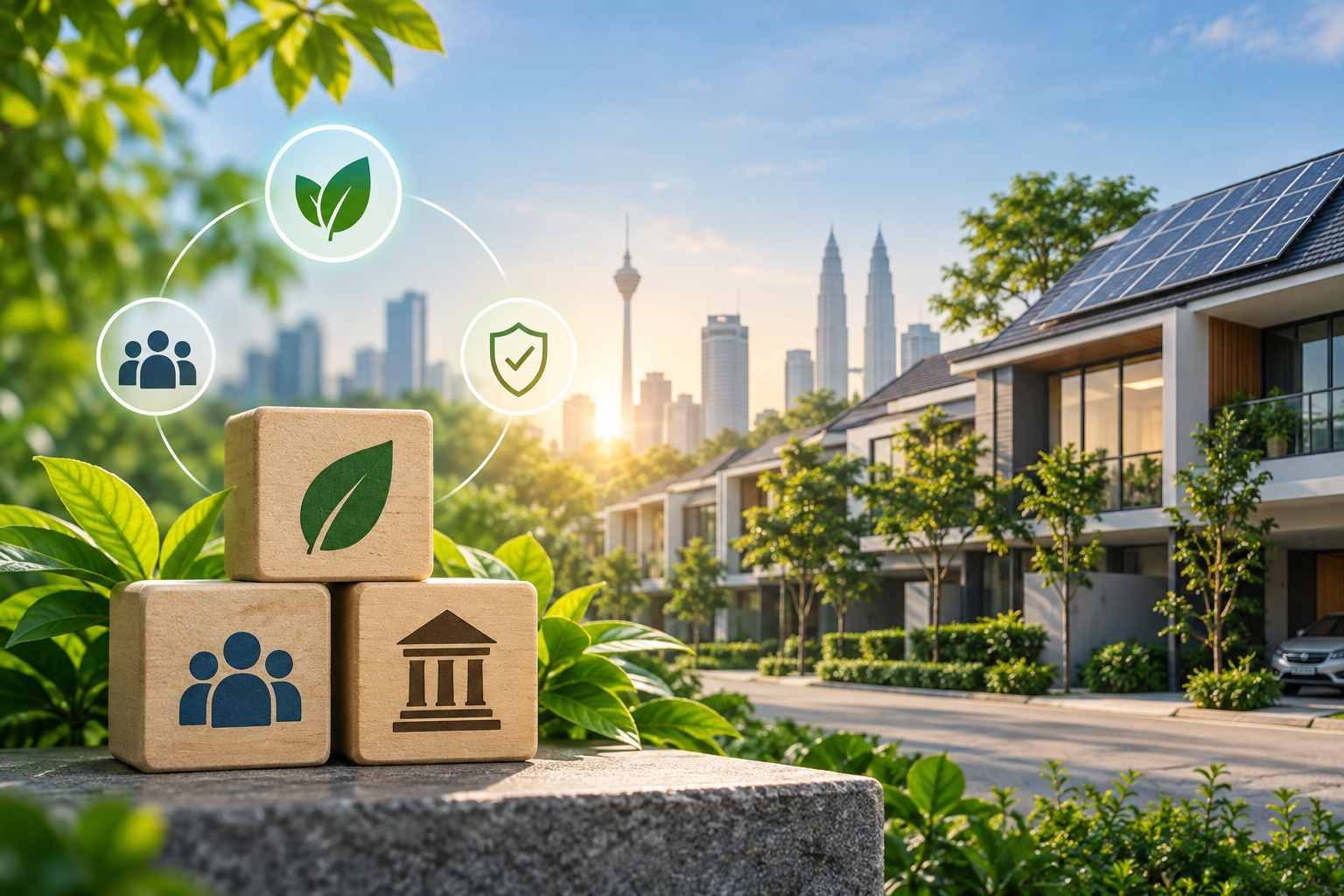
ESG has become a common term in business and investment, but it is increasingly relevant to home buyers too. In property, ESG refers to how a development addresses environmental impact, community well-being and responsible management.
For buyers looking at ESG in Malaysia, the useful question is not whether a project uses words such as “green” or “sustainable.” It is whether the home and surrounding development include practical features that support lower resource use, better liveability and responsible long-term ownership.
What ESG Means in the Malaysian Property Sector
ESG stands for Environmental, Social and Governance. In residential property, the environmental element looks at how efficiently homes use energy and resources.
The social element considers whether a development supports safe, healthy and connected communities. Governance relates to how responsibly and transparently the developer operates.
For home buyers, ESG is less about corporate reporting and more about practical questions: Is the home designed efficiently? Are there useful community spaces? Is project information clear? Does the developer have a reliable track record?
Why ESG Is Becoming More Relevant to Malaysian Home Buyers
Sustainability has become more visible in Malaysia as electricity costs, environmental awareness and household efficiency receive greater attention. Buyers are also considering the long-term cost of owning a home rather than only its purchase price.
Developers are responding with features such as solar energy systems, EV-ready infrastructure, natural lighting, ventilation and greener shared spaces.
ESG gives buyers a useful framework for comparing how projects approach energy use, community design and long-term responsibility.
The Environmental Side of ESG in a Home
The environmental part of ESG may include rooftop solar PV, energy-efficient electrical systems, natural lighting, ventilation, water-saving features, recycling facilities and green areas.
Solar panels may reduce reliance on grid electricity, while good daylight and ventilation can reduce the need for artificial lighting or constant air-conditioning. Green spaces can improve the wider living environment.
Buyers should focus on whether environmental features are functional and appropriate for the property rather than judging sustainability by the number of “green” features advertised.
The Social Side of ESG: Liveability and Community
The “S” in ESG focuses on people. In residential property, this includes how comfortable, safe and inclusive the wider development is for residents.
Parks, playgrounds, walking or cycling areas and recreational facilities can encourage active lifestyles and create opportunities for neighbours to interact. Security, accessibility and convenient connections to amenities also affect everyday liveability.
A development does not need extravagant facilities to perform well socially. What matters is whether shared spaces are useful and whether the planning supports a genuine community.
Governance When Choosing a Property Developer
Governance may be less visible than solar panels or parks, but it is equally relevant. It concerns how a developer manages projects, communicates with buyers and meets legal and regulatory responsibilities.
Before purchasing, buyers can review the developer’s completed projects, approvals, specifications and clarity of sales information. Important details should be explained consistently rather than hidden behind vague marketing claims.
Good governance also means being realistic about timelines, features and sustainability benefits. Buyers should still conduct normal due diligence even when a project is positioned around ESG principles.
Can ESG Features Reduce Long-Term Home Ownership Costs?
Some ESG-related features can help reduce running costs, although savings vary between households. Solar PV may lower grid electricity use, while efficient lighting, ventilation and electrical systems can reduce unnecessary energy consumption.
Built-in infrastructure may also reduce the need for later upgrades. An EV-ready electrical setup, for example, can simplify adding home charging in the future.
The key is to look beyond the purchase price. Electricity use, maintenance and future renovation requirements can all influence the actual cost of owning a property over many years.
How to Tell Whether a Property Is Truly Sustainable
Terms such as “eco,” “green” and “sustainable” are easy to use in marketing, so buyers should look for evidence behind them.
Check the property specifications and ask what is included as standard. If solar is advertised, find out the system capacity and warranty. If a project is EV-ready, clarify what infrastructure is installed. Buyers can also ask about energy-saving design, recycling, water efficiency and landscaping.
Where applicable, recognised green-building certifications can provide an additional reference point, but practical features still matter more than labels alone.
ESG Features Worth Looking for in a New Home
When comparing developments, buyers can use a simple ESG checklist:
- Solar PV or renewable-energy provisions.
- EV-ready electrical infrastructure.
- Good natural lighting and ventilation.
- Energy-efficient electrical systems.
- Green and recreational spaces.
- Recycling or waste-management facilities.
- Security and community-focused planning.
- Clear specifications and developer information.
Not every property needs every feature. A well-planned home with practical energy-saving design may be more useful than a project with many sustainability claims but little everyday value.
Klemeru Township as a Practical Example of ESG in Residential Development
Eadepro Development’s Klemeru Township in Ipoh provides one example of ESG ideas incorporated into a landed residential project.
Phase 2 homes include 6kWp solar PV systems, three-phase wiring and EV charging provisions, while the township includes 24-hour security and a 4.5-acre community park with recreational facilities.
These features cover environmental and social aspects of ESG. They do not replace core buying considerations such as price, location and build quality, but they give buyers additional factors to assess when comparing homes.
ESG Features Built Into Klemeru Township
At Klemeru, solar infrastructure can support lower grid electricity use, while EV provisions prepare homes for changing transport needs. The community park and security planning address the social side of township living.
For buyers, this is a practical way to think about ESG in Malaysia. ESG should not be a reason to purchase a property on its own. Instead, it provides another set of questions for deciding whether a home supports efficient, liveable and responsible long-term ownership.