CSR in Malaysian Property: How Developers Give Back to the Communities They Build In
CSR in Malaysian Property: How Developers Give Back to the Communities They Build In
Corporate social responsibility, or CSR, is becoming increasingly relevant in Malaysia’s property sector. Property development affects more than the homes being built. It can influence neighbourhood connectivity, public spaces, environmental habits and the overall quality of life of the people who eventually live there.
For developers, CSR can therefore extend beyond donations, sponsorships or one-off community events. It can also be reflected in how developments are planned, how shared spaces are designed and how sustainability is incorporated into everyday living.
This is particularly important for township developments, where decisions made at the planning stage can continue shaping a community long after construction has been completed.
What CSR Means in the Malaysian Property Sector
In Malaysia’s property sector, CSR refers to the ways developers take responsibility for the broader social and environmental impact of their projects. This may include supporting local communities, improving shared facilities, protecting green spaces and encouraging more responsible use of resources.
A meaningful approach to CSR in Malaysia does not need to rely only on large campaigns. It can also appear in practical development decisions, such as creating useful community spaces, planning for residents’ long-term needs and ensuring that a project contributes positively to the area around it.
Common CSR Programmes by Property Developers
Property developers can contribute to local communities through a wide range of initiatives. Common examples of a CSR program in Malaysia include:
- Community support: Donations, welfare programmes and assistance for local organisations.
- Education initiatives: Supporting schools, students or learning programmes.
- Environmental activities: Tree planting, clean-up campaigns and recycling programmes.
- Local community events: Supporting neighbourhood activities that encourage interaction among residents.
- Health and well-being programmes: Community health campaigns, recreational initiatives or wellness activities.
- Sustainable development features: Incorporating green spaces, energy-saving features and facilities that encourage more responsible lifestyles.
The strongest programmes generally address genuine community needs rather than functioning solely as short-term promotional activities.
Building Better Communities Through Sustainable Property Development
Property development can improve the surrounding community when it provides spaces and infrastructure that support everyday life.
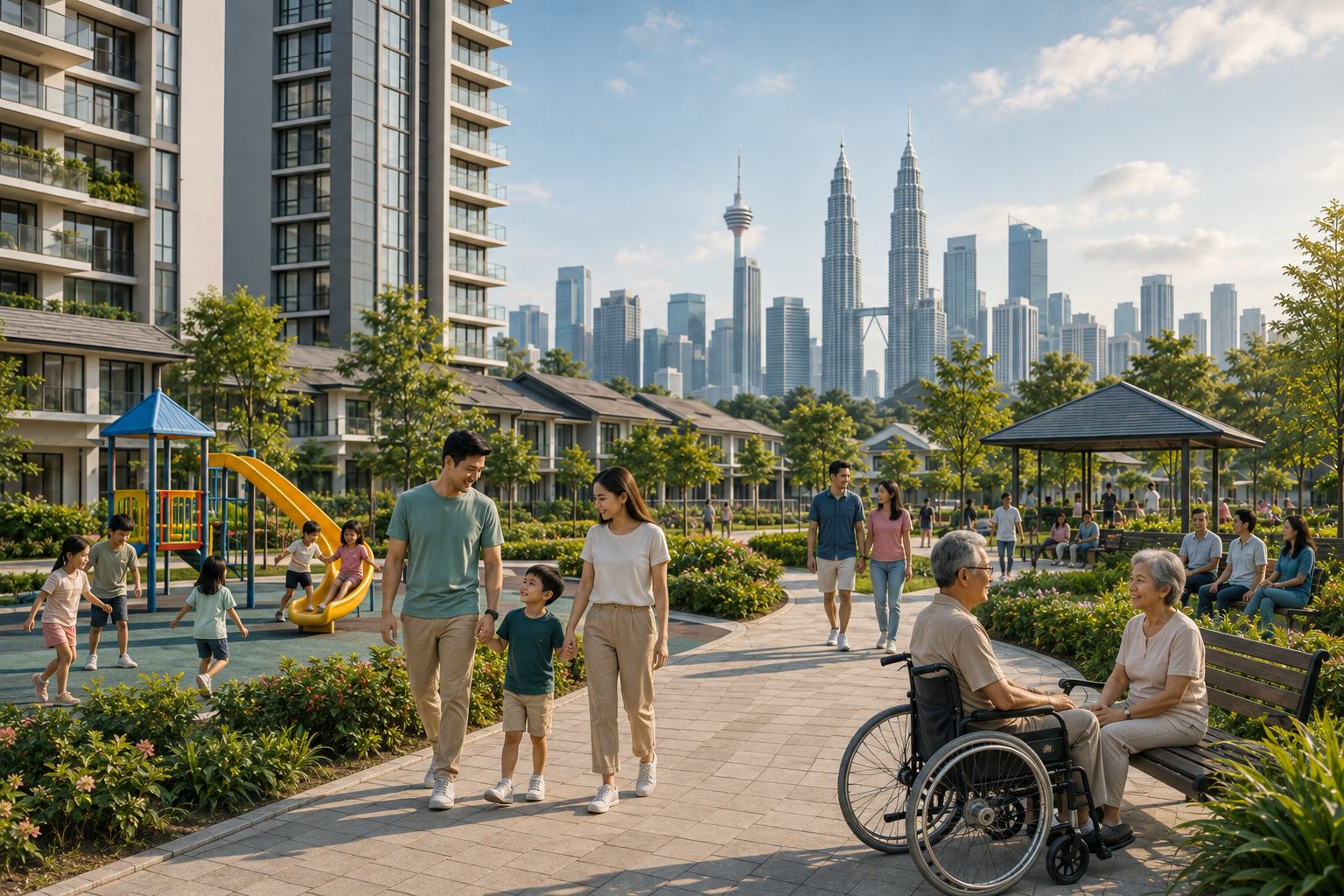
Parks, playgrounds, jogging routes and recreational areas give residents more opportunities to exercise, relax and interact with their neighbours. Good connectivity to schools, shops, healthcare and other essential services can also make a township more convenient and reduce unnecessary travel.
Sustainability can be incorporated at the same time. Recycling facilities, waste-reduction initiatives, green spaces and energy-conscious home designs can make environmentally responsible habits easier to practise.
Instead of simply encouraging residents to live more sustainably, developers can create an environment that supports those behaviours from the beginning.
Encouraging More Sustainable Habits Within Communities
Sustainable communities are not created through building design alone. Residents also need practical facilities and environments that make responsible habits easier to maintain.
Developers can support this through dedicated recycling areas, appropriate waste-management facilities, energy-saving features and landscaped green spaces. Environmental awareness programmes can further encourage residents to think about how everyday choices affect their surroundings.
Resource efficiency is another consideration. Features that reduce unnecessary electricity or water consumption can gradually influence household behaviour.
When sustainability measures are practical and easy to use, they are more likely to become part of residents’ daily routines instead of remaining ideas that exist only in development plans or marketing materials.
Evaluating a Property Developer’s CSR Commitment
Home buyers should look at what a developer has actually implemented rather than relying only on CSR or sustainability slogans.
Useful indicators include practical community facilities, accessible green spaces, environmental features and evidence of continued involvement with residents or surrounding communities.
Buyers can also examine whether these initiatives are part of a broader development strategy or simply one-off campaigns. Ongoing programmes and recurring sustainability measures generally provide stronger evidence of long-term commitment.
Transparency matters too. Developers that clearly explain the facilities being provided, how sustainability measures work and how the wider community may benefit make it easier for buyers to evaluate their corporate social responsibility in Malaysia efforts.
Why CSR Matters When Choosing a Property Developer
CSR provides buyers with another way to understand how a developer approaches its projects.
A developer that considers community spaces, environmental responsibility and long-term liveability may be thinking beyond the immediate sale of individual homes. For owner-occupiers especially, these factors can influence daily life for many years.
CSR should not replace fundamental property considerations such as location, price, construction quality, layout and accessibility. Instead, it can complement them.
When comparing similar developments, buyers may find value in looking at how each developer approaches green spaces, community facilities, sustainability and the overall environment being created around the homes.
Creating Long-Term Value Beyond Individual Homes
Responsible property development can create benefits that extend beyond individual homeowners.
Improved connectivity, landscaped areas, shared recreational spaces and neighbourhood amenities may help strengthen the wider community. New developments can also support surrounding businesses and services by increasing local activity and demand.
Developers can increase this positive impact by considering how new projects connect with existing roads, schools, commercial areas and established neighbourhoods.
From a CSR perspective, this means thinking about the development as part of a larger community rather than as an isolated collection of properties. The long-term value of a project depends partly on how well the neighbourhood continues to function after the homes have been completed and occupied.
How Eadepro Klemeru Township Is Designed Around Community, Not Just Homes
Eadepro‘s Klemeru Township reflects how community and sustainability considerations can be incorporated directly into township planning.
Rather than focusing only on individual houses, the development includes shared spaces and sustainability-related features intended to support residents over the longer term. These include a 4.5-acre community park, recreational facilities, a dedicated recycling zone, solar PV systems and infrastructure that can support EV charging.
The broader approach reflects an important principle of property-sector CSR: developers can contribute to communities not only through separate corporate programmes, but also through the places they create.
For Eadepro, Klemeru demonstrates how residential planning, community facilities and sustainability can be considered together, helping create a township designed around everyday living rather than homes alone.