
Solar Panels for Malaysian Homes: The Complete 2026 Buyer's Guide
Solar Panels for Malaysian Homes: The Complete 2026 Buyer's Guide
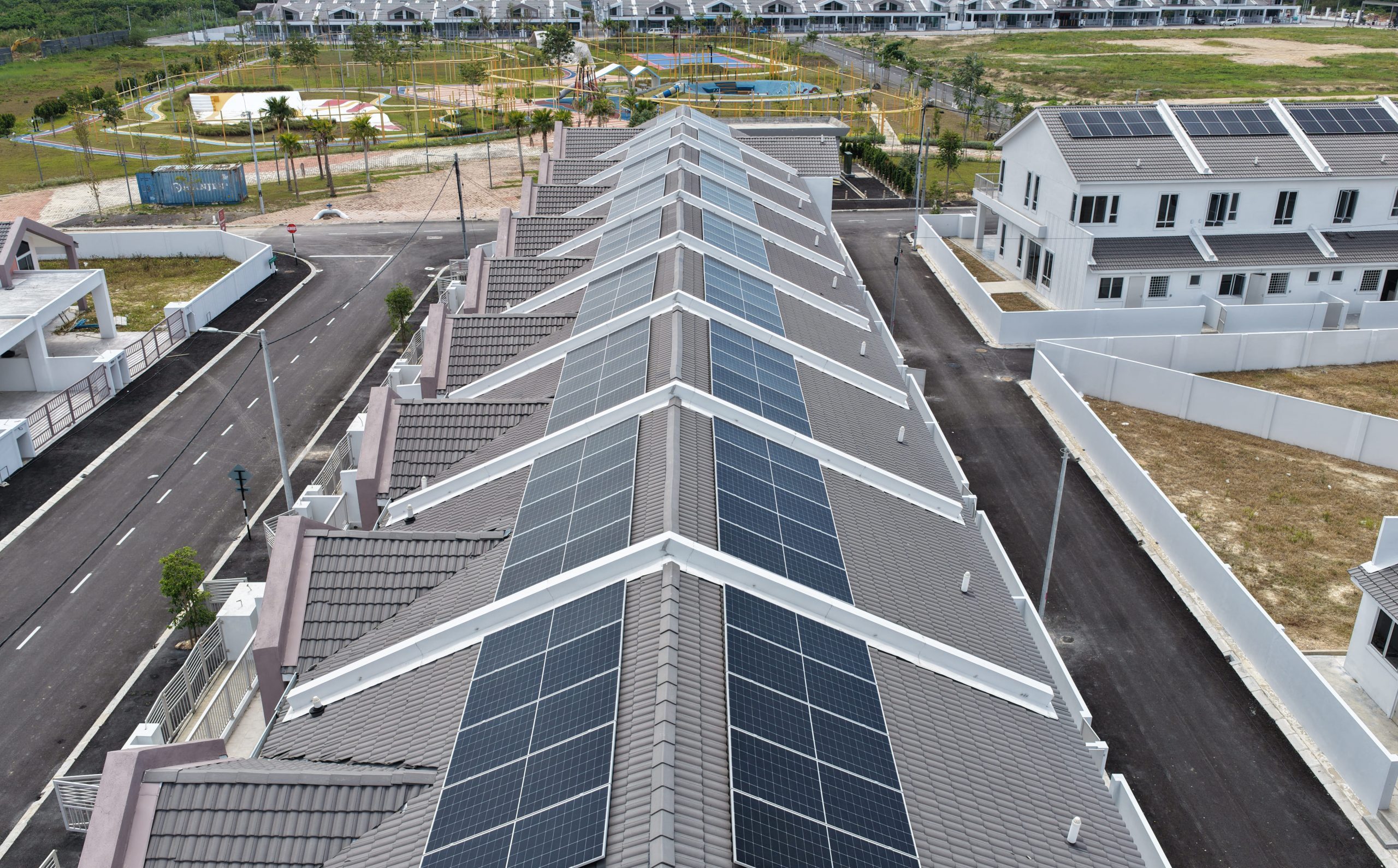
Solar panels are becoming a more practical consideration for Malaysian homeowners as electricity costs and energy efficiency receive more attention. A rooftop solar photovoltaic (PV) system allows a home to generate electricity during daylight hours, reducing the amount of power purchased from the grid.
For buyers in 2026, choosing a solar panel for home use involves more than comparing panel brands. System size, roof condition, installation quality, government programmes and long-term maintenance all matter. Here are the main points to consider before installing solar panels for a home in Malaysia.
How Solar Panels for Homes Work
A residential solar PV system converts sunlight into electricity. Panels on the roof produce direct-current electricity, while an inverter converts it into alternating current that household appliances can use.
Electricity generated during the day is normally used by the home first. If generation is lower than household demand, additional electricity is drawn from TNB. Under Malaysia’s Solar Accelerated Transition Action Programme, or Solar ATAP, eligible consumers can also export surplus solar generation to the grid for an energy offset.
Solar therefore reduces grid dependence rather than replacing the grid completely. Actual performance varies according to system size, roof orientation, shading, weather and household usage.
Solar ATAP and 2026 Home Solar Incentives
Solar ATAP replaced the previous Net Energy Metering programme and began on 1 January 2026. It allows eligible TNB consumers in Peninsular Malaysia to install rooftop solar for self-consumption while exporting qualifying surplus energy to the grid.
For domestic consumers, standard capacity limits are up to 5 kW for single-phase supply and up to 15 kW for three-phase supply, although larger installations may require additional technical assessment.
Malaysian citizens participating in Solar ATAP may also qualify for the 2026 SuRIA Home incentive. It offers RM600 per kWac, capped at RM3,000, from 1 June to 31 December 2026 on a first-come, first-served basis, subject to programme conditions and available allocation.
How Much Does Solar Panel Installation Cost in Malaysia?
There is no fixed price for solar panel installation because quotations depend on system capacity, equipment brands, roof access, mounting requirements, electrical work and warranties.
Current 2026 market guides commonly place a fully installed 5 kW residential system at roughly RM18,000 to RM25,000, while larger systems cost more. These figures should be treated as market estimates rather than guaranteed prices, as quotations vary between installers and properties.
When comparing quotations, check whether panels, inverter, mounting, cabling, application work, testing, monitoring, warranties and after-sales support are included. The lowest headline price may not provide the best long-term value if important services are excluded.
Choosing the Right Solar System Size
Bigger is not automatically better. The appropriate solar system should reflect the home’s electricity consumption and daytime usage.
Start by reviewing several months of TNB bills and noting average monthly kWh consumption. Homes where occupants work from home, use air conditioning during the day or operate appliances throughout daylight hours may consume more solar electricity directly.
Roof area also matters. Shading from trees or neighbouring buildings can reduce generation, while roof orientation and pitch affect panel placement.
A registered solar provider should assess the property and explain why a particular capacity is suitable instead of simply recommending the largest system the roof can accommodate.
What to Check Before Installing Solar Panels
Before proceeding with solar panel installation, homeowners should review several practical factors:
- Roof condition: Repair ageing tiles, leaks or structural issues first.
- Installer credentials: Solar ATAP applications are submitted through a SEDA-registered PV service provider.
- Warranties: Compare panel, inverter and workmanship coverage separately.
- Monitoring: Check whether an app or portal tracks electricity generation.
- Maintenance: Ask about cleaning, inspection and fault support.
- Savings estimates: Ask what assumptions were used to calculate projected savings.
A clear proposal should also explain expected generation, equipment specifications, approvals and system layout.
How Much Can Solar Panels Reduce Your Electricity Bill?
Solar can reduce the amount of electricity purchased from TNB, but the same percentage savings cannot be guaranteed for every household.
Savings depend on how much electricity the panels generate and how much the household uses. A family with substantial daytime electricity demand may benefit differently from a household that is empty until evening.
Solar is therefore best viewed as part of a wider household energy strategy that can include efficient air-conditioning use, energy-efficient appliances, natural ventilation and closer monitoring of electricity consumption.
Homeowners should be cautious of quotations that promise a fixed percentage saving without first examining the household’s actual consumption pattern.
Install Solar After Buying or Choose a Solar-Equipped Home?
Homeowners can add solar after purchasing a property, allowing them to select their preferred provider and system specification. The trade-off is having to arrange the roof assessment, quotations, approvals, installation and electrical coordination themselves.
Alternatively, buyers can choose a new home where solar infrastructure has already been considered during development. This can simplify the process because roof planning and electrical systems may already accommodate solar.
Neither option is automatically better. Buyers should compare the system specification, ownership arrangement, warranty coverage and expected output just as carefully as they would with an aftermarket installation.
Solar Integration at Eadepro Klemeru Township
Eadepro Development has incorporated solar PV directly into Klemeru Township in Ipoh rather than leaving it entirely as a future homeowner upgrade.
Eadepro states that every home at Klemeru is equipped with solar PV panels. The township also includes EV charging isolators, three-phase wiring and designs that emphasise natural lighting, high ceilings and ventilation.
This approach can reduce some of the coordination normally involved when adding solar after moving in. It does not remove the need to understand household electricity consumption or system performance, but it makes energy-related infrastructure part of the home from the outset.
For Malaysian property buyers in 2026, the useful question is not simply whether a home has solar panels, but how well its overall design supports lower household energy use over the long term.