
TNB Tariff 2026: How the New Structure Changes Your Monthly Bill
TNB Tariff 2026: How the New Structure Changes Your Monthly Bill
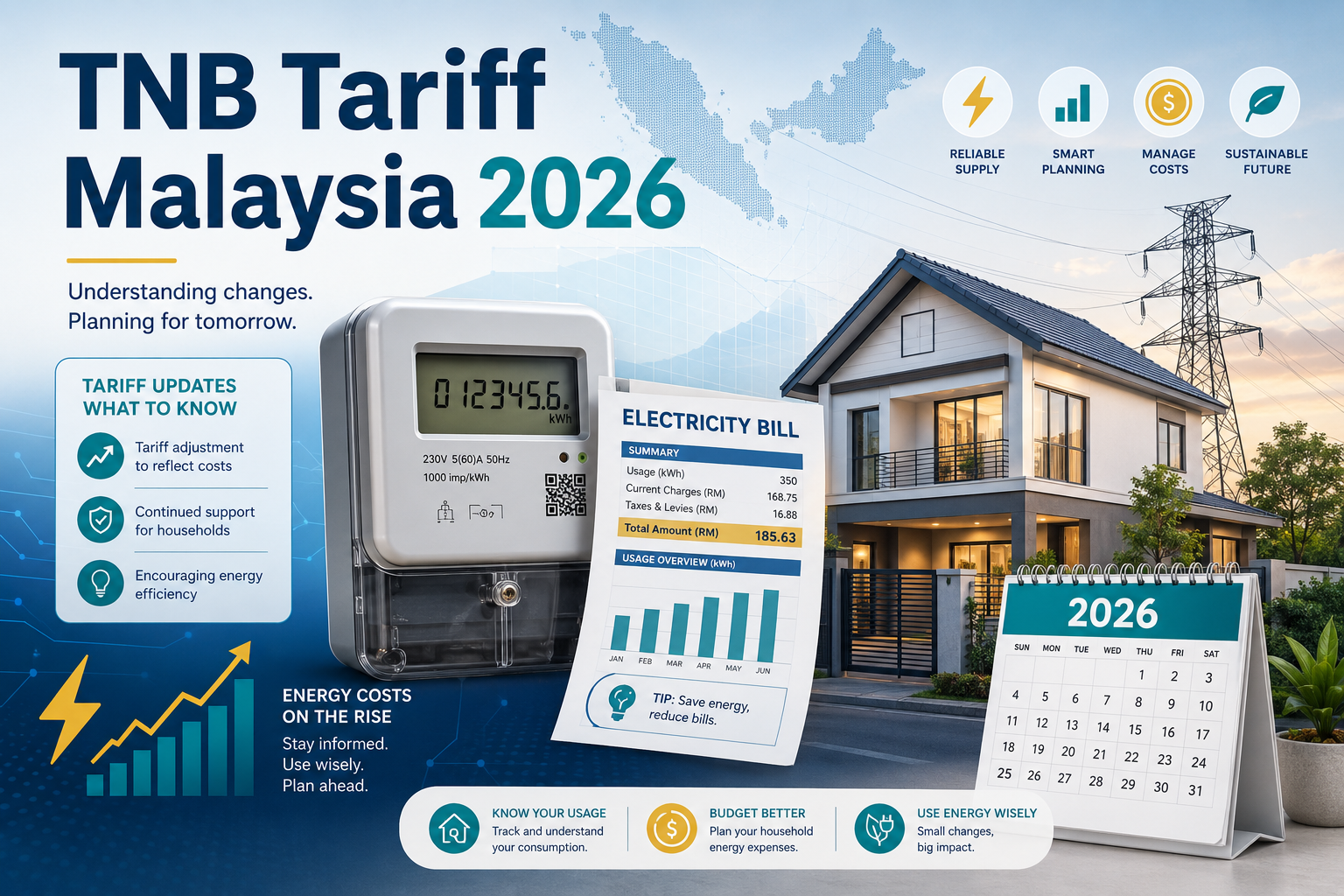
If your TNB electricity bill looks different in 2026, it is because households in Peninsular Malaysia are being billed under the tariff structure introduced on 1 July 2025. The structure falls under Regulatory Period 4 (RP4), which runs until 31 December 2027.
Instead of relying mainly on previous consumption blocks, bills now separate electricity costs into clearer components. Your monthly bill may therefore be influenced by total usage, energy-efficiency incentives, time of use and changes in electricity generation costs.
What the TNB Tariff 2026 Actually Refers To
There was no separate nationwide TNB tariff introduced specifically on 1 January 2026. Instead, the tariff structure introduced in July 2025 continues to determine electricity bills throughout 2026.
Under RP4, the average base tariff was set at 45.40 sen per kWh, while the tariff schedule itself was restructured to make electricity costs more transparent. The Energy Commission states that the current framework remains effective until the end of 2027.
This means homeowners comparing their 2026 bills with older bills should focus on how the billing structure has changed rather than looking only for a single new electricity rate.
How the New TNB Tariff Structure Works
One of the biggest differences is the move towards a more itemised electricity bill.
The current structure separates costs related to electricity generation and delivery instead of combining most of them within consumption blocks. Domestic bills can include components relating to:
- Energy charges for the electricity generated and consumed.
- Capacity charges associated with maintaining sufficient generation capacity.
- Network charges for transmitting and distributing electricity.
- Retail charges related to customer services.
- Automatic Fuel Adjustment (AFA) where applicable.
- Energy Efficiency Incentives for qualifying domestic consumption.
The intention is to make it easier for consumers to understand what different parts of their electricity bill represent.
Energy Efficiency Incentives Reward Lower Consumption
The new structure places greater emphasis on energy efficiency. When the tariff changes were announced, the Energy Commission introduced an Energy Efficiency Incentive for domestic households consuming up to 1,000 kWh per month.
The mechanism was designed to reduce the impact of the restructuring on households that use electricity more efficiently. This makes household consumption patterns increasingly important.
Running air conditioners for long periods, using electric water heaters frequently or operating several high-consumption appliances simultaneously can quickly raise monthly electricity use.
Reducing unnecessary consumption therefore does more than lower the number of kilowatt-hours purchased—it may also help households remain within consumption ranges that benefit from available incentives.
Automatic Fuel Adjustment Can Change the Cost of Electricity
Another major change is the replacement of the previous Imbalance Cost Pass-Through mechanism with the Automatic Fuel Adjustment (AFA). AFA reflects changes in generation costs, including fuel prices and electricity purchase costs, and can be updated monthly.
This means grid electricity costs may change even when household consumption stays similar. For homeowners, improving energy efficiency can therefore help reduce monthly usage while also lowering exposure to future fluctuations in electricity-generation costs.
Time-of-Use Gives Households More Control Over When They Consume Electricity
Eligible domestic customers with smart meters can consider TNB’s Time-of-Use (ToU) scheme. Under the current structure, weekday peak hours run from 2:00 PM to 10:00 PM, while other weekday hours and weekends are treated as off-peak.
Households that can shift high-consumption activities, such as washing, drying or EV charging, to off-peak periods may reduce electricity costs.
However, ToU is not automatically cheaper for everyone. Homeowners should first review when most of their electricity is used before deciding whether the scheme suits their daily routine.
Which Households May Notice the Biggest Difference?
The impact of the tariff structure varies because Malaysian households have very different electricity-use patterns.
A smaller household that uses air conditioning moderately and stays within lower monthly consumption levels may experience little change, particularly where energy-efficiency incentives apply.
Larger households may have a different experience. Several bedrooms using air conditioning, frequent water-heater use, additional refrigerators, home offices, EV charging and other electrical appliances can push consumption considerably higher.
Homes with higher electricity demand therefore have a stronger reason to monitor their monthly kWh usage rather than focusing only on the amount shown at the bottom of the bill. Understanding where electricity is being consumed is increasingly important under a structure designed to encourage greater energy efficiency.
Practical Ways to Reduce Your Monthly TNB Bill
Homeowners do not necessarily need major renovations to start reducing electricity consumption. Several smaller changes can make a difference when maintained consistently:
- Set air conditioners to a reasonable temperature and clean filters regularly.
- Choose energy-efficient appliances when replacing older equipment.
- Switch off unused appliances instead of leaving them continuously on standby.
- Use natural lighting and ventilation where the home’s design allows.
- Run suitable high-consumption appliances during ToU off-peak periods if subscribed to the scheme.
- Monitor monthly kWh consumption through your electricity bill or smart-meter tools.
- Consider whether rooftop solar is practical for longer-term electricity generation.
The most effective strategy depends on the household. A family with heavy daytime air-conditioning use, for example, has different opportunities for savings from a household where most electricity is consumed at night.
Why Solar Becomes More Relevant Under the New Tariff Structure
The tariff changes also highlight a broader question for homeowners: how much electricity does the household need to purchase from the grid?
A rooftop solar PV system generates electricity during daylight hours, allowing suitable household loads to use solar-generated electricity instead of drawing the same amount entirely from TNB. That can be particularly relevant for homes with daytime electricity demand from air conditioning, refrigerators, home offices and other appliances.
Solar does not mean a household will stop receiving a TNB bill, and actual savings depend on factors including system size, household consumption, sunlight conditions and how generated electricity is used. However, reducing grid consumption can provide households with another way to manage long-term electricity costs as tariff structures and generation costs evolve.
Klemeru Township and Eadepro’s Approach to Household Energy Use
For property buyers, energy efficiency is becoming an important consideration alongside location, layout, price and accessibility. Eadepro Development reflects this approach at Klemeru Township in Ipoh, where homes include solar PV panels, EV-charging isolators, three-phase wiring, natural lighting, high ceilings and ventilation.
Built around the idea that “Sustainability Begins from Home,” these features are integrated from the start rather than added only after homeowners move in.
The changing TNB tariff does not guarantee that solar-equipped homes will always be cheaper to own, but it does make future household running costs more relevant when comparing properties.
For buyers in 2026, electricity use is no longer just a utility expense to consider after receiving the keys. The home’s design and energy infrastructure can influence how much grid electricity a household uses over time and how effectively residents manage future energy costs.